

Fieldwork will be based on the size of the site and number of trenches required, with contingency fees for additional trenches or other additional works.
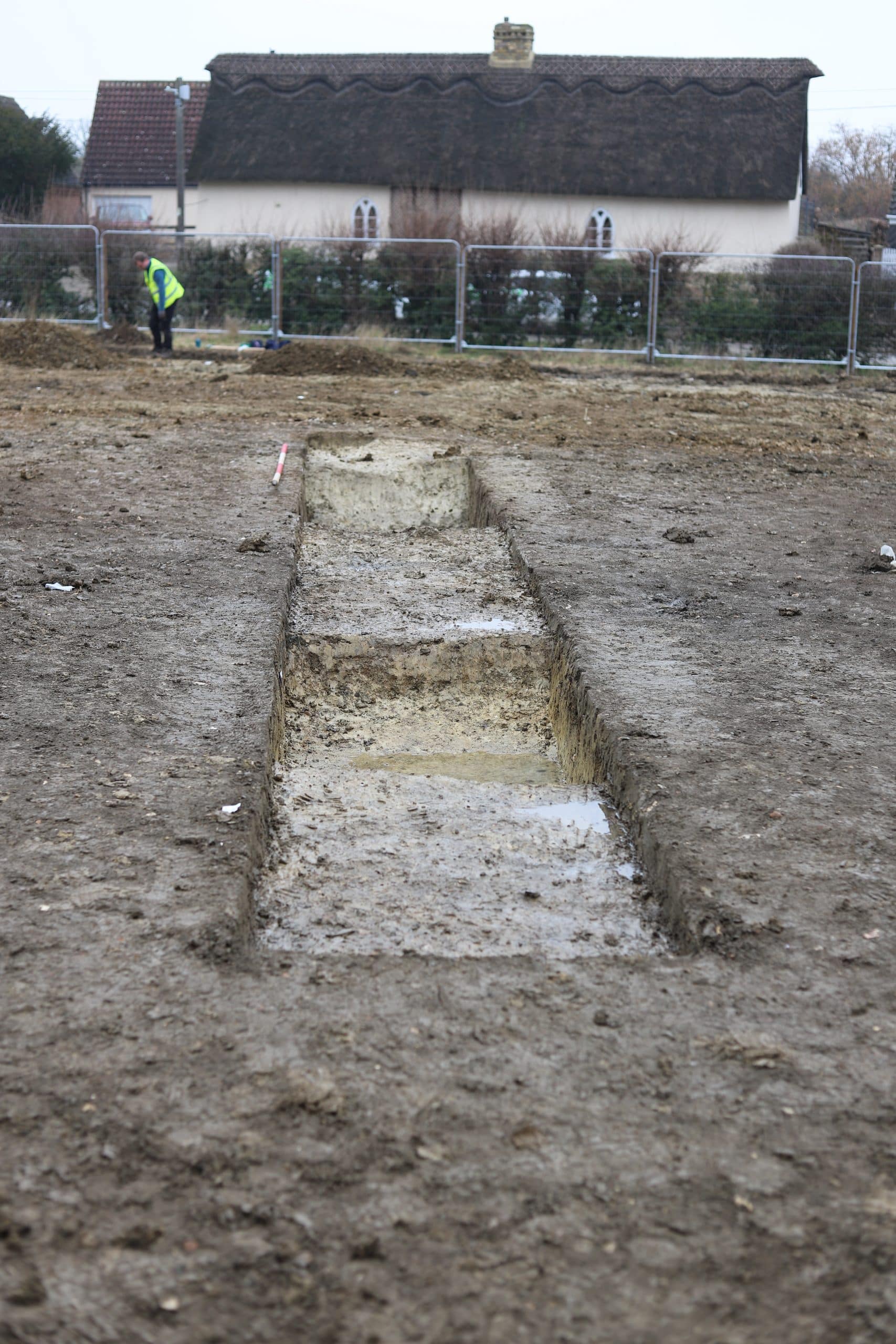
An Archaeological Evaluation is frequently required as a condition of planning where intact archaeological remains are known or suspected. It is usually in the form of trial trenching, the results of which determine the level of archaeological survival and whether there is a need for more detailed investigation.
Trial trenching establishes the depth and character of any surviving archaeological deposits or features. Trenches are usually opened by machine and toothless ditching bucket and may be of varying size, although dimensions of 25m × 1.8m are. The number of trenches required is based on a percentage of the site area. Where remains are present, the aim is to excavate only as much as is required to determine their date, function and condition.
Trial trenching is the best tool for determining the archaeological character of a site and whether further archaeological mitigation is required. If archaeology is found, the evaluation report will include a suitable level of post-excavation assessment that may include specialist reports.
A Written Scheme of Investigation will be prodced which will detail the works, which must be approved by the county archaeologist prior to any site works.
We’d love to hear from you. Whether you have a question about our services, need project support, or simply want to learn more about how Brindle & Green can help, our team is here to assist. We aim to respond to all enquiries within 1-2 working days. Fill in the form below or email info@brindlegreen.co.uk

